5 laboratory safety rules every lab should make visible
Why these 5 laboratory safety rules matter
The most useful 5 laboratory safety rules are easy to remember and specific enough to guide daily work: assess hazards before starting, use the right controls and PPE, handle chemicals and equipment correctly, keep the workspace clean, and know what to do in an emergency. They do not replace a laboratory’s written procedures, training records or regulatory duties. They work as a front-line checklist for students, technicians, researchers and visitors before routine work becomes risky.
Guidance from OSHA, CDC/NIOSH, the American Chemical Society and the National Research Council supports the same basic approach: laboratory safety depends on planning, controls, training, housekeeping and emergency readiness, not only warning signs. OSHA’s Laboratory Standard, for example, requires covered workplaces using hazardous chemicals to develop and carry out a written Chemical Hygiene Plan with procedures, control measures, training and provisions for medical consultation where applicable. (osha.gov)
For more articles in this topic area, visit the laboratory safety section.
Rule 1. Assess hazards before starting any experiment
A laboratory task should not begin with the first measurement, transfer or instrument setting. It should begin with a short hazard assessment. That means identifying what could cause harm, who could be affected, how exposure or injury could occur, and which controls are needed before work starts.
For chemical work, this includes reviewing labels, safety data sheet information, incompatibilities, exposure routes, waste requirements and the scale of the experiment. For biological, electrical, thermal, compressed gas or mechanical work, the assessment should also cover containment, moving parts, pressure, temperature, sharps, aerosols and stored energy.
The American Chemical Society often describes chemical safety through the RAMP framework: recognize hazards, assess risks, minimize risks and prepare for emergencies. The value of that framework is that it moves the discussion beyond “be careful” to practical questions: what could go wrong, how likely is it, and what controls are in place? (pubs.acs.org)
- Confirm that the procedure is approved for the lab, equipment and personnel involved.
- Identify hazardous materials, reactions, pressure sources, heat sources, and sharp or moving components.
- Check whether the work requires supervision, prior approval or special training.
- Plan waste collection before generating waste.
- Stop and ask if the procedure changes, scales up or produces unexpected results.
This rule is especially important for routine tasks. Familiarity can hide changed conditions: a different solvent, a clogged line, a damaged cable, a new reagent lot or a crowded bench can turn a familiar procedure into a different risk profile.
Rule 2. Use engineering controls and PPE correctly
Personal protective equipment is important, but it should not be the only line of defense. The CDC/NIOSH hierarchy of controls ranks controls from most effective to least effective, generally placing elimination, substitution and engineering controls above administrative controls and PPE. In laboratory practice, a fume hood, biosafety cabinet, shield, enclosure or safer substitute can reduce risk in ways that gloves and goggles alone cannot. (cdc.gov)
For many labs, the basic PPE set includes safety glasses or chemical splash goggles, a properly fitted lab coat, closed-toe shoes, long pants or equivalent leg coverage, and task-appropriate gloves. The key phrase is task-appropriate. Glove material, splash protection, face protection, respiratory protection and thermal protection must match the hazard. Nitrile gloves are common in laboratories, for example, but no single glove material protects against every chemical or every exposure time.
| Control type | Example in a lab | Why it matters |
|---|---|---|
| Substitution | Using a less hazardous solvent or smaller quantity when feasible | Reduces the hazard at the source |
| Engineering control | Working in a certified fume hood or suitable containment device | Helps separate the worker from the hazard |
| Administrative control | Written SOPs, training, access limits and signs | Guides consistent behavior |
| PPE | Goggles, gloves, lab coat and face shield when needed | Protects the individual when other controls do not fully remove risk |
Correct use also means understanding equipment limits. A fume hood sash should be positioned as required by the lab procedure. Gloves should be inspected, changed after contamination and removed before touching phones, keyboards, door handles or clean surfaces. Eye protection should stay on while hazards are present, not only during the visibly messy part of a task.
Rule 3. Handle, label and store materials with care
Unsafe storage and poor labeling are common sources of laboratory confusion. Every container should be identifiable, compatible with its contents and stored in the correct location. Secondary containers, working solutions and temporary containers also need clear labels under local rules and site procedures.
Chemical compatibility matters because some materials become more dangerous when stored together. Acids and bases, oxidizers and organics, water-reactive chemicals, flammables, compressed gases and peroxide-forming chemicals all require considered segregation. Refrigerators, cabinets and shelves should be suitable for the material, not selected simply because space is available.
Good material handling also applies beyond chemicals. Samples, cultures, sharps, glassware, cryogens, compressed gas cylinders and instrument accessories all need controlled movement and storage. Cylinders should be secured. Glassware should be checked for cracks. Sharps should be handled with a disposal plan. Cryogenic materials require protection against cold burns, pressure buildup and oxygen displacement where relevant.
- Label containers immediately and legibly.
- Never use food or drink containers for laboratory materials.
- Keep incompatible materials separated according to the lab’s storage plan.
- Use secondary containment when transporting or storing liquids that could leak.
- Do not store chemicals permanently in fume hoods unless the lab’s procedure specifically allows it.
- Keep waste containers closed, compatible and labeled according to the site’s waste process.
OSHA’s laboratory requirements include standard operating procedures and control measures in the Chemical Hygiene Plan. For that reason, material handling should be written into lab-specific instructions rather than passed down only by habit. (osha.gov)
Rule 4. Keep benches, instruments and walkways clean
Housekeeping is sometimes treated as cosmetic, but in a laboratory it is a safety control. Clutter makes labels harder to read, blocks emergency equipment, hides spills, increases breakage and slows evacuation. A clean bench also protects work quality by reducing cross-contamination and accidental sample mix-ups.
A practical standard is to keep only what is needed for the current task in the active work area. Reagents, tools, notebooks, pipette tip boxes and small instruments should have defined places. Cords and tubing should not create trip hazards or pull points. Floors should be dry and free of boxes, waste containers and unused equipment. Emergency showers, eyewash stations, exits, fire extinguishers and electrical panels should remain visible and accessible. See also: analytical methods.
The National Research Council recommendations reproduced in OSHA’s non-mandatory Appendix A emphasize that safety equipment such as spill kits, safety shields, fire safety equipment, PPE, safety showers and eyewash units should be available in well-marked, highly visible locations in chemical laboratories. (osha.gov)
Instrument areas need the same discipline. Balances, centrifuges, autoclaves, ovens, incubators, microscopes and analytical instruments often have specific cleaning, loading and shutdown requirements. A centrifuge with unbalanced tubes, an oven with incompatible materials or an instrument with blocked ventilation can create hazards that are not obvious at a glance.
End-of-work cleanup should be part of the procedure, not an optional final step. Before leaving the lab, workers should close containers, shut down equipment as required, remove contaminated PPE correctly, wash hands and make sure waste is in the correct container.
Rule 5. Know emergency actions before something goes wrong
Emergency readiness must be learned before an alarm, splash, spill or injury. Everyone working in or visiting a lab should know how to report an incident, where to find emergency equipment, when to evacuate and when not to attempt cleanup.
At a minimum, lab personnel should know the location of eyewash stations, safety showers, spill kits, fire alarms, fire extinguishers, exits, first aid resources and emergency contact information. They should also understand the limits of their role. Small, low-hazard spills may be handled by trained personnel under site procedures. Larger, unknown, reactive, toxic, flammable or biologically hazardous releases may require evacuation and response by designated staff.
- For eye or skin exposure, use the emergency equipment specified by the lab’s procedure and seek medical evaluation when required.
- For fire, activate the alarm or follow the site emergency plan; do not fight a fire unless trained, authorized and safe to do so.
- For spills, alert others, isolate the area if safe, and follow the spill response plan.
- For equipment failure, stop work safely, disconnect energy sources only if trained and allowed, and report the issue.
- For injuries or near misses, report promptly so hazards can be corrected before recurrence.
Emergency preparation also depends on clear communication. A safety rule is only useful if a new student, visiting technician or night-shift worker can understand it quickly. Signs, labels, posted instructions and training refreshers should use plain language and match the actual layout of the room.
How to turn the rules into a daily checklist
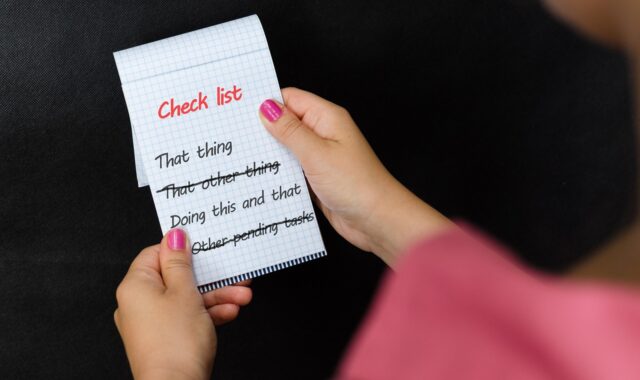
The five rules work best as a brief, repeatable pre-work check. A posted list is useful, but a checklist tied to real tasks is stronger. The following version can be adapted for teaching labs, research labs, quality control rooms and instrument rooms.
- Before work: Have I reviewed the hazards, procedure, required approvals and waste plan?
- Controls: Are the correct hood, shield, cabinet, guard or other engineering controls ready and functioning?
- PPE: Am I wearing the right eye, face, hand, body and foot protection for this task?
- Materials: Are all containers labeled, compatible, stable and limited to the quantity needed?
- Workspace: Are aisles, emergency equipment, cords and bench areas clear?
- Emergency readiness: Do I know what to do if there is a spill, exposure, fire, alarm or equipment failure?
Supervisors and safety officers can use the same checklist for observation and coaching. The purpose is not to catch people making mistakes. It is to find weak points in procedures, training, layout, storage and equipment before those weak points cause harm.
For ongoing reading, the laboratory safety category collects related guidance for safer lab practice.
Frequently asked questions
Are these 5 laboratory safety rules enough for every lab?
No. They are a practical starting point, not a complete compliance program. Each lab needs rules and procedures based on its hazards, jurisdiction, institution and work type. A chemistry teaching lab, a clinical lab, a microbiology lab and an industrial quality lab may share basic principles but still require different detailed controls.
What is the most important laboratory safety rule?
The most important rule is to assess hazards before work begins. Without that step, PPE, storage, waste handling and emergency planning may be mismatched to the real risk. In practice, hazard assessment supports every other rule.
Why is PPE not enough by itself?
PPE protects the individual wearer, but it can fail, be selected incorrectly or be used inconsistently. Engineering controls, safer substitutes, written procedures and training reduce risk before it reaches the worker. That is why safety programs usually treat PPE as one layer, not the whole system.
How often should lab safety rules be reviewed?
Rules should be reviewed during onboarding, before new or changed procedures, after incidents or near misses, and at regular intervals set by the organization. They should also be updated when equipment, materials, regulations or room layouts change.