HSE laboratory safety in 2026 for chemical, biological and waste risks
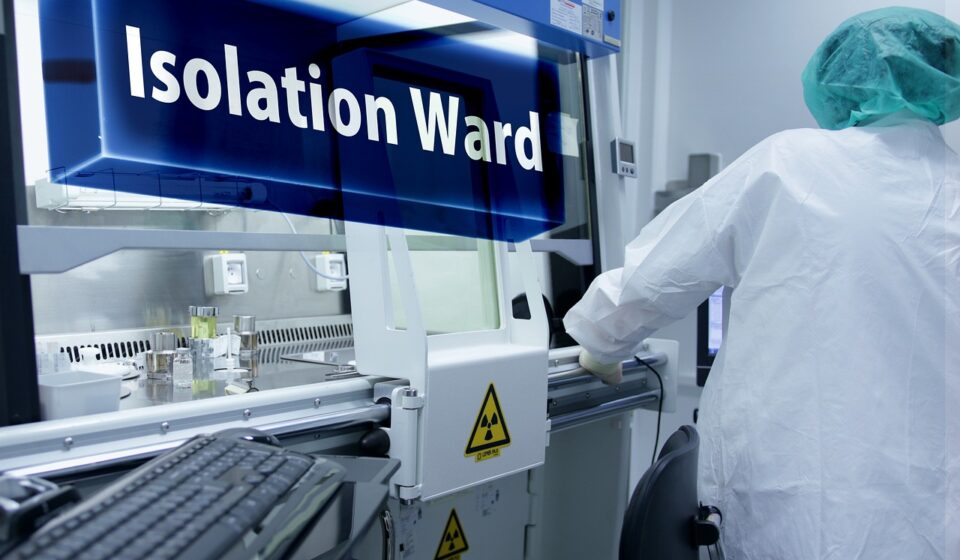
What HSE laboratory safety means in 2026
HSE laboratory safety is the day-to-day management of health, safety and environmental risks created by laboratory work. In 2026, it involves more than providing lab coats and safety glasses. A workable program connects written chemical hygiene requirements, task-level risk assessment, ventilation, storage, waste handling, biosafety practices, incident response and worker training. The objective is to prevent exposure, fire, contamination, environmental release and avoidable emergency response.
For U.S. laboratories, the main reference points include OSHA’s Laboratory Standard at 29 CFR 1910.1450, OSHA’s Hazard Communication Standard at 29 CFR 1910.1200, the NIOSH hierarchy of controls, CDC and NIH biosafety guidance, EPA hazardous waste rules and consensus fire protection practices such as NFPA 45. This article focuses on practical controls, not legal interpretation. State, local and institutional requirements can be stricter, so each facility should verify the rules that apply to its own operations.

For more related articles, see the site’s laboratory safety section.
Start with a written chemical hygiene plan
For laboratories using hazardous chemicals in the United States, OSHA’s Laboratory Standard requires a written Chemical Hygiene Plan, often shortened to CHP. The plan must set out procedures, equipment, personal protective equipment and work practices capable of protecting employees from the health hazards of the chemicals used in that specific laboratory. It also must be readily available to employees and reviewed at least annually, with updates when necessary.
A useful CHP is not a binder kept only for inspections. It should function as the operating manual for chemical risk control. At minimum, it should connect these elements:
- Standard operating procedures for work involving hazardous chemicals.
- Criteria for control measures such as fume hoods, glove boxes, local exhaust, shielding and containment.
- Requirements for PPE selection, use, inspection, replacement and limitations.
- Procedures for particularly hazardous substances, including select carcinogens, reproductive toxins and substances with high acute toxicity.
- Designated areas for higher-risk work and rules for access control.
- Exposure monitoring, medical consultation and incident follow-up triggers.
- Training requirements for new assignments and new exposure situations.
- Waste handling, decontamination and emergency procedures.
The strongest plans are task-specific. The controls for weighing a toxic powder are not the same as the controls for diluting an acid, transferring a flammable solvent, maintaining a vacuum pump or disinfecting a biological safety cabinet. Each activity should show a clear link between the hazard, the control, the person responsible and the evidence that the control is working.
Use the hierarchy of controls before relying on PPE
NIOSH describes the hierarchy of controls as a preferred order for reducing workplace exposures: elimination, substitution, engineering controls, administrative controls and personal protective equipment. This hierarchy matters in laboratories because PPE is highly visible and familiar, but it is usually the last line of defense.
Elimination and substitution should be considered when a method is designed, reagents are purchased or a workflow changes. A lower-toxicity solvent, microscale procedure, pre-diluted reagent or closed transfer system may reduce exposure before the worker enters the room. Engineering controls, including fume hoods, biological safety cabinets, local exhaust, interlocks, pressure control and secondary containment, reduce exposure at the source. Administrative controls, such as training, signage, scheduling, permits and access restrictions, help standardize behavior. PPE reduces the remaining risk when other controls cannot remove it.
| Control level | Laboratory example | Key limitation |
|---|---|---|
| Elimination | Stop using a reagent or process that is no longer needed | May require method validation or scientific approval |
| Substitution | Use a less hazardous solvent or smaller reaction scale | Substitutes can introduce new hazards if not evaluated |
| Engineering controls | Use a certified fume hood, biological safety cabinet or closed system | Requires maintenance, performance checks and correct use |
| Administrative controls | Use SOPs, restricted access, training and pre-task review | Depends on consistent supervision and compliance |
| PPE | Use compatible gloves, eye protection, lab coat or respirator | Can fail if selected, fitted, worn or removed incorrectly |
A practical HSE review should ask whether the hazard can be removed, reduced, isolated or automated before PPE is assigned. If the answer is always no, the risk assessment may be incomplete.
Account for 2026 hazard communication changes
Hazard communication deserves renewed attention in 2026. OSHA published its final rule updating the Hazard Communication Standard on May 20, 2024, and the revised rule took effect on July 19, 2024. OSHA later extended several compliance dates by four months in a January 15, 2026 final rule. As a result, employer actions tied to substances are due by November 20, 2026, where necessary, while employer actions tied to mixtures are due by May 19, 2028.
For laboratories, the practical impact is not limited to manufacturers or distributors. Labs receiving chemical products may see revised classifications, safety data sheets, label elements, small-container labeling and new or changed hazard information. If a newly identified physical hazard, health hazard or other covered hazard affects the workplace, employers may need to update alternative workplace labels, revise the written hazard communication program and provide additional employee training.
A late-2026 laboratory review should include these steps:
- Identify single-chemical substances in active use and compare supplier SDS versions received since the 2024 rule took effect.
- Check whether internal labels, secondary container labels or laboratory information systems reflect updated hazards.
- Update training where hazard information has changed, especially for chemicals under pressure, flammable materials, acute toxicity, sensitizers and corrosives.
- Confirm that personnel know where SDSs are located and how to use them before starting a task.
- Record the review so that changes are traceable during audits or incident investigations.
This is also a good time to remove obsolete SDS copies, reconcile chemical inventory records and verify that unlabeled or poorly labeled containers have not accumulated in refrigerators, cabinets or shared bench areas.
Control higher-risk work at the task level
Laboratory HSE failures often occur when general rules do not reach the details of a task. A safer approach is to classify work by risk scenario and define controls before the work begins.
Chemical exposure and inhalation risks
Volatile solvents, corrosive vapors, toxic powders, nanomaterials and gases require controls matched to their route of exposure. A fume hood is not a storage cabinet; it must be used with correct sash height, uncluttered airflow and compatible operations. Powder handling may need containment, antistatic measures, local exhaust, wet methods or dedicated weighing enclosures. OSHA’s Laboratory Standard also requires employee notification of certain exposure monitoring results within 15 working days after receipt.
Fire, explosion and reactive hazards
Flammable liquids, pyrophorics, oxidizers, organic peroxides, compressed gases and incompatible storage groups should be reviewed together, not as isolated inventory items. NFPA 45, including its 2024 edition, is an important consensus reference for laboratories using chemicals, covering fire protection, ventilation, chemical fume hoods and related laboratory features. The practical control question is direct: if a container breaks, a cabinet heats, a reaction runs away or a cylinder valve fails, what stops the event from escalating?
Biological materials
For biological laboratories, the CDC and NIH Biosafety in Microbiological and Biomedical Laboratories guidance emphasizes protocol-driven risk assessment. The sixth edition is advisory rather than a regulation, but it is widely used as a biosafety practice reference in the United States. Biosafety levels combine facility design, safety equipment, practices and PPE; they are not labels that can be assigned without reviewing the agent, procedure, route of exposure, host factors and facility controls. See also: analytical methods.
Connect waste management with daily lab behavior
Environmental performance is a core part of HSE laboratory safety. Waste rules depend on generator status, jurisdiction, waste characteristics and the type of institution. EPA’s hazardous waste framework includes alternative requirements for eligible academic entities under 40 CFR part 262 Subpart K. Those optional rules are designed for certain colleges, universities, teaching hospitals and nonprofit research institutes affiliated with a college or university. EPA describes requirements such as a Laboratory Management Plan, hazardous waste determinations by trained professionals and removal of hazardous waste from the laboratory every twelve months.
Labs that are not operating under those alternative requirements generally need to follow applicable generator and satellite accumulation requirements. In daily work, waste controls should make correct behavior easy:
- Use compatible, closed containers with clear contents and hazard identification.
- Keep waste at or near the point of generation when required by the applicable program.
- Segregate incompatible waste streams, such as acids and bases, oxidizers and organics, or halogenated and non-halogenated solvents where required.
- Never use sinks, trash bins or evaporation as informal disposal routes unless explicitly allowed by an approved procedure and regulation.
- Track container start dates, accumulation limits, pickup schedules and responsible persons.
Waste audits should include old samples, unknowns, abandoned containers, peroxide-forming chemicals and shared storage areas. These are common weak points because ownership can become unclear over time.
Build emergency readiness into normal operations
Emergency equipment is effective only when it is accessible, maintained and understood. Laboratories using corrosives or materials capable of serious eye or skin injury need ready access to appropriate emergency washing equipment under applicable OSHA requirements, with ANSI/ISEA Z358.1 commonly used as the performance reference for eyewashes and showers. Access routes should remain clear, and workers should know the nearest equipment location before handling hazardous materials.
Spill kits, fire extinguishers, alarms, gas shutoffs, first-aid arrangements and emergency contacts should be reviewed in context. A generic spill kit may not address hydrofluoric acid, mercury, biological material, reactive metals or unknown mixed waste. The response plan should define which spills trained laboratory staff may manage and which events require evacuation and emergency responders.
Incident learning is equally important. Near misses, minor spills, unusual odors, failed hood alarms, unlabeled containers and PPE failures should be reported and reviewed before they become serious events. Useful corrective actions are specific: change the procedure, reduce the chemical quantity, add containment, improve storage, retrain a defined group or remove an obsolete process.
A practical audit checklist for HSE laboratory safety
An internal audit does not need to be complicated, but it should cover the full risk chain from procurement to disposal. The checklist below can be adapted for teaching, research, quality control, clinical and industrial laboratories.
- Governance: Is there a current Chemical Hygiene Plan, assigned Chemical Hygiene Officer or equivalent role, and documented annual review?
- Inventory: Are chemicals, gases and biological materials current, labeled and stored by compatibility?
- Risk assessment: Are higher-risk tasks reviewed before work begins, including scale, route of exposure, energy source and waste output?
- Controls: Are fume hoods, biosafety cabinets, ventilation systems, alarms and containment devices inspected and used correctly?
- HazCom: Are SDSs accessible, labels legible and training updated for newly identified hazards under the revised OSHA standard?
- PPE: Are gloves, coats, eye protection and respiratory protection selected for the actual hazard rather than habit?
- Waste: Are waste containers closed, compatible, labeled and removed according to the applicable program?
- Emergency readiness: Are eyewashes, showers, extinguishers, spill kits and exits accessible and checked?
- Records: Are training, exposure monitoring, inspections, corrective actions and incident reviews documented?
The value of an audit comes from comparing what the written program says with what workers actually do. If the two do not match, the solution may be better training, but it may also be a simpler procedure, better equipment or fewer unnecessary hazards.
Frequently asked questions
Is HSE laboratory safety the same as chemical hygiene?
No. Chemical hygiene is a central part of laboratory safety, especially under OSHA’s Laboratory Standard, but HSE laboratory safety is broader. It also includes biological risk, physical hazards, fire protection, waste management, environmental release prevention, emergency preparedness and safety culture.
How often should a Chemical Hygiene Plan be reviewed?
OSHA’s Laboratory Standard requires the employer to review and evaluate the effectiveness of the Chemical Hygiene Plan at least annually and update it as necessary. A review should also occur when new chemicals, equipment, procedures, personnel or exposure situations change the risk profile.
Do laboratories need to update training because of the 2024 Hazard Communication rule?
They may need to. If revised classifications, labels or SDSs identify new physical hazards, health hazards or other covered hazards, employers must update workplace communication and provide additional training as necessary by the applicable compliance dates.
Can PPE be the main laboratory safety control?
PPE is important, but it should not be the first or only control when elimination, substitution, engineering controls or administrative controls can reduce the risk more reliably. PPE works best as part of a layered system.
Why include waste in a laboratory safety program?
Waste is part of the same hazard lifecycle as procurement, storage and use. Poor waste segregation, unclear labels, excessive accumulation or unknown containers can create exposure, fire, reaction and environmental risks long after the original experiment is finished.