Analytical weighing scale selection and use for reliable lab results
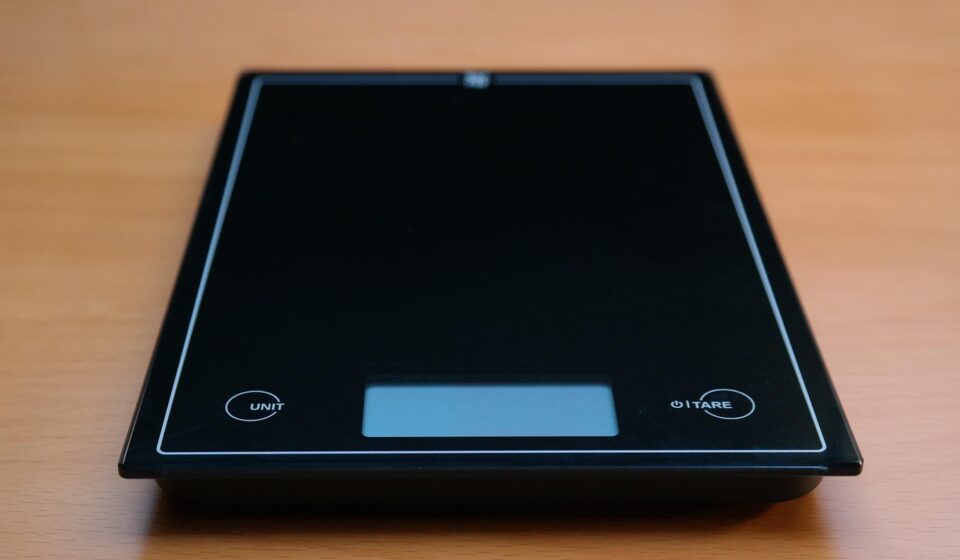
Why analytical weighing scale selection matters
An analytical weighing scale is used when a small mass difference can affect an analytical result, formulation, calibration standard or quality decision. In laboratory terminology, the more precise term is often analytical balance. Many buyers and technicians, however, search for analytical weighing scale when they need a high-resolution laboratory instrument with a draft shield and milligram or sub-milligram readability.
Selection should start with the smallest net sample that needs to be weighed, the tolerance of the method and the conditions in which the instrument will operate. Readability alone is not enough. A balance may display 0.1 mg and still be unsuitable if repeatability, minimum weight, calibration status, environment or operator technique are not controlled.
For laboratories building or updating a core instrumentation setup, the weighing station is often an early decision. Errors introduced during sample preparation can carry through the rest of the analytical workflow.
What an analytical weighing scale is used for
An analytical weighing scale is designed for small quantities that require higher sensitivity than a general-purpose bench scale. Typical uses include preparing reference standards, weighing reagents for assays, measuring residues, checking filter mass changes, compounding small batches and supporting quantitative chemical analysis.
The instrument is normally installed with a draft shield because air movement, static charge and temperature gradients can disturb very small readings. The catalog name matters less than the weighing performance. The key question is whether the instrument can produce results that are fit for the method, documented for audits where required and stable in the intended location.
| Instrument type | Common role | Typical decision point |
|---|---|---|
| Precision balance | Routine laboratory or production weighing | Higher capacity with moderate readability |
| Analytical balance | Small-sample quantitative work | Fine readability, draft protection and repeatability |
| Semi-micro or microbalance | Very small mass measurements | Special installation, handling and environmental control |
| Moisture analyzer | Mass loss during drying | Application-specific heating and weighing method |
Specifications that matter beyond decimal places
The display resolution of an analytical weighing scale is easy to compare, but it is only one part of performance. A useful specification review should include capacity, readability, repeatability, linearity, eccentricity, stabilization time, minimum sample weight and the availability of calibration or qualification documentation.
Readability and capacity
Readability is the smallest displayed increment, often written as d. A balance with 0.1 mg readability can display changes of 0.0001 g, but that increment should not be treated as the guaranteed measurement uncertainty.
Capacity also needs careful review. A laboratory may need to weigh a small active ingredient inside a much heavier container. If the container and sample together approach the maximum capacity, performance and usability can suffer. The practical questions are straightforward: what is the smallest net mass to be measured, and what is the heaviest vessel that will be used with it?
Repeatability and minimum weight
Repeatability describes how closely repeated weighings agree under the same conditions. For small samples, repeatability often dominates the relative uncertainty of the result. This is why minimum weight is critical. If a sample mass is too small relative to the balance performance, the percentage error can be too high even when the reading appears stable.
In regulated pharmaceutical contexts, USP General Chapter <41> requires balances used for accurately weighed materials to be calibrated over the operating range and to meet repeatability and accuracy requirements. The same principle is useful outside pharmaceuticals: the balance must be evaluated at the loads that matter to the method.
Linearity, eccentricity and real use
Linearity is the ability to indicate correctly across the weighing range. Eccentricity, sometimes called corner-load error, is the effect of placing the load away from the center of the pan. These errors may be small, but they become relevant when users change container sizes, weigh near the edge of the pan or use tare-heavy vessels.
A procurement checklist should therefore ask for more than a headline readability figure. It should request performance evidence, calibration options and a service plan suitable for the lab’s intended workload.
Calibration, verification and standard references
Calibration is a documented comparison between the balance indication and traceable reference weights, with measurement uncertainty stated. Adjustment is different: it changes the balance response, often by using an internal or external weight. A balance may be adjusted frequently, but it still needs appropriate calibration evidence if results must be defensible in quality systems, audits or regulated methods.
Several standards and guidance documents shape how laboratories assess weighing performance. USP <41> is important for official pharmaceutical weighing requirements. USP <1251> is widely used as informational guidance on weighing practice. OIML R 76 describes metrological and technical requirements for non-automatic weighing instruments and uses accuracy classes, verification scale intervals and minimum capacity concepts. EURAMET Calibration Guide No. 18 provides detailed guidance for calibration of non-automatic weighing instruments, including error of indication and uncertainty evaluation. In the United States, NIST Handbook 44 is central for legal metrology and commercial weighing devices.
Not every analytical laboratory balance is purchased for legal-for-trade use. Even so, these references help explain why terms such as verification scale interval, minimum load and uncertainty should not be ignored.
For day-to-day control, many laboratories perform routine checks with suitable test weights. These checks can reveal drift, damage, contamination or environmental problems between formal calibrations. They do not replace a full calibration certificate, but they help confirm that the balance remains fit for use before critical weighing work begins. See also: analytical methods.
Environmental controls that protect weighing results
An analytical weighing scale is sensitive because it is designed to be sensitive. That sensitivity makes the installation site as important as the instrument model. Air drafts from doors, vents and people walking past the bench can disturb the reading. Vibration from centrifuges, pumps, compressors or nearby foot traffic can increase instability. Temperature differences between the sample, container and balance chamber can create convection currents.
Static charge can pull or repel lightweight containers and powders. Hygroscopic or volatile samples can gain or lose mass during the weighing process. These effects are easy to underestimate because they may appear as slow drift, long stabilization time or readings that look acceptable but are biased.
Good installation practice starts with a stable bench, level instrument, controlled room conditions and enough warm-up time. The balance should be kept away from direct sunlight, air-conditioning outlets and high-traffic walkways. Operators should use clean vessels, close the draft shield doors, avoid touching containers with bare hands when heat transfer matters and keep the pan area free of spilled powder.
For difficult samples, weighing by difference, antistatic treatment, covered containers or humidity control may be more important than buying another decimal place.
A practical buying checklist for laboratory teams
Before selecting an analytical weighing scale, define the measurement requirement in practical terms. Start with the smallest net sample mass, acceptable relative error, container mass, required throughput and documentation needs. Then compare instruments against that application rather than against a generic catalog hierarchy.
- Smallest net weight: Identify the smallest sample that must be weighed accurately, not just the smallest display increment.
- Maximum total load: Include vessels, tare containers, accessories and any weighing aids.
- Repeatability evidence: Review repeatability data and how it relates to the lab’s own weighing range.
- Minimum weight policy: Decide whether the lab will calculate, verify and label a minimum weight for each balance.
- Calibration and service: Confirm traceable calibration availability, local support and realistic service intervals.
- Data handling: Consider printer, USB, Ethernet, LIMS or electronic record needs where applicable.
- Environment: Match the model and accessories to drafts, vibration, static, sample volatility and cleaning requirements.
- User workflow: Check draft shield access, pan size, stabilization speed, leveling method and ease of cleaning.
A common mistake is choosing the highest displayed resolution within budget while ignoring the minimum sample size. A better approach is to define the weighing risk first. If a method requires 10 mg portions with tight tolerance, the balance requirement is different from a method that routinely weighs 500 mg portions. If multiple methods will share the same instrument, base the specification on the most demanding validated or quality-critical use.
Common mistakes that reduce weighing reliability
| Mistake | Why it matters | Better practice |
|---|---|---|
| Equating readability with accuracy | The display increment does not include all uncertainty sources. | Review repeatability, calibration uncertainty and method tolerance. |
| Weighing below practical minimum weight | Small absolute variation becomes a large percentage error. | Set a minimum weight based on repeatability and required tolerance. |
| Using internal adjustment as proof of calibration | Adjustment changes the response but does not by itself document uncertainty. | Maintain traceable calibration records and routine checks. |
| Installing the balance near drafts or vibration | The reading may drift, fluctuate or stabilize slowly. | Use a stable bench, draft control and appropriate room placement. |
| Ignoring sample behavior | Static, evaporation, moisture uptake or magnetism can bias results. | Adapt the container, handling method and weighing sequence. |
These errors are not limited to inexperienced users. They often appear when laboratories move an instrument, change sample types, add a new method or increase throughput without revisiting the weighing process. A short standard operating procedure, routine check log and operator training can prevent many avoidable deviations.
Frequently asked questions
Is an analytical weighing scale the same as an analytical balance?
In many purchasing searches, yes. Analytical balance is the more precise laboratory term, while analytical weighing scale is a common search phrase. The important point is to confirm performance specifications, calibration needs and suitability for the sample mass range.
What readability should I choose?
Choose readability only after defining the smallest net mass and acceptable error. For many analytical laboratory tasks, 0.1 mg readability is common, but demanding microgram-level work may require a semi-micro or microbalance with stricter installation controls.
How often should an analytical balance be calibrated?
There is no universal interval that fits every lab. Frequency should reflect risk, usage, regulatory expectations, environment, instrument history and the consequences of an incorrect result. Routine checks between formal calibrations are often used to monitor ongoing performance.
Can internal calibration replace external calibration?
Internal adjustment is useful for compensating for changes such as temperature effects, but it is not the same as an independent calibration with traceable weights and documented uncertainty. Labs that need audit-ready records should maintain formal calibration documentation.
Why can a stable reading still be wrong?
A stable display only means the indication is not changing much at that moment. Bias can still come from calibration error, off-center loading, static charge, temperature effects, moisture change, evaporation or a sample mass below the balance’s practical minimum weight.