Laboratory safety guide for chemical, biological, and equipment hazards
A practical laboratory safety guide starts with risk assessment
Laboratory safety works best when each task is assessed before work begins. Lab managers, safety officers, researchers, technicians, and purchasing teams need a practical way to identify hazards, select controls in the right order, document expected work practices, and confirm that those controls still function. A useful lab safety program is not just a wall poster or a PPE checklist. It links chemical hygiene, biosafety, equipment maintenance, emergency response, training, and incident review into a daily operating system. For related guidance, see the site’s laboratory safety section.
The reference points for this article include OSHA’s Laboratory Standard at 29 CFR 1910.1450, OSHA’s first-aid and emergency flushing requirements, the NIOSH hierarchy of controls, the CDC and NIH Biosafety in Microbiological and Biomedical Laboratories guidance, NFPA 45 for laboratories using chemicals, and ANSI/ISEA Z358.1 for emergency eyewash and shower equipment. Local law, institutional policy, fire code, building design, and the materials actually used in the lab may impose stricter requirements.

Use risk assessment before choosing controls
Risk assessment turns general safety advice into a lab-specific plan. It asks what can go wrong, how likely the event is, how severe the consequence could be, and which controls reduce the risk to an acceptable level. The CDC and NIH BMBL framework emphasizes protocol-driven risk assessment for biological work. Chemical laboratories use a similar approach through hazard evaluation, standard operating procedures, exposure controls, and emergency planning.
Review the task, not just the room
A room label such as chemistry lab, microbiology lab, or teaching lab is too broad to define the risk. Review the actual task: weighing powders, transferring solvents, centrifuging infectious material, heating pressure vessels, charging lithium batteries, cutting glass tubing, or cleaning a spill. Each activity can create different exposure routes, including inhalation, skin absorption, injection, ingestion, eye splash, fire, or explosion.
Repeat the assessment when work changes
A risk assessment should not be treated as permanent. Repeat it when a new chemical is introduced, a concentration changes, a procedure scales up, equipment is modified, personnel change, ventilation is repaired, or an incident reveals a weakness. Informal pre-task discussions may be enough for routine work, but higher-risk activities should be supported by written review and supervisor approval.
Build chemical hygiene into routine work
For laboratories covered by OSHA’s Laboratory Standard, employers using hazardous chemicals must develop and carry out a written Chemical Hygiene Plan capable of protecting employees from health hazards and keeping exposures below applicable limits. The plan should not sit in a binder that nobody opens. It should state who is responsible, which procedures require prior approval, where exposure controls are required, how training is provided, and how medical consultation or exposure evaluation is handled when needed.
- Chemical inventory: Maintain an accurate inventory that reflects what is actually present, including peroxide formers, compressed gases, carcinogens, highly toxic materials, pyrophorics, corrosives, and flammable liquids.
- Safety data sheets: Keep SDS information accessible to personnel and use it when selecting storage groups, PPE, spill materials, and emergency procedures.
- Labeling: Label secondary containers with identity and hazard information. Do not rely on memory, color, or location.
- Storage compatibility: Separate acids from bases, oxidizers from organics, water-reactive chemicals from water sources, and incompatible compressed gases from one another.
- Waste control: Label waste containers, keep them closed when not in use, segregate incompatible waste streams, and follow institutional and regulatory disposal procedures.
The Chemical Hygiene Officer or equivalent safety lead should periodically review procedures, training records, inspection findings, and incidents. A strong plan reflects how the laboratory actually operates. A generic template with no task-specific controls is unlikely to protect personnel during unusual or high-risk work.
Apply the hierarchy of controls before relying on PPE
The NIOSH hierarchy of controls ranks hazard controls from most effective to least effective: elimination, substitution, engineering controls, administrative controls, and personal protective equipment. This order matters because PPE depends on correct selection, fit, training, maintenance, and consistent use. A face shield can reduce splash injury, but it does not remove the source of the splash. A glove can delay skin contact, but the wrong glove material may fail quickly when exposed to a solvent.
| Control level | Laboratory example | Why it matters |
|---|---|---|
| Elimination | Cancel a hazardous step that does not affect the result | Removes the exposure source entirely |
| Substitution | Use a less toxic solvent or smaller reaction scale | Reduces inherent hazard before work begins |
| Engineering controls | Use a chemical fume hood, biosafety cabinet, shield, enclosure, or local exhaust | Separates the worker from the hazard |
| Administrative controls | Use SOPs, access limits, training, signage, scheduling, and buddy systems | Reduces risky behavior and improves consistency |
| PPE | Use gloves, goggles, lab coats, respirators, aprons, or face shields | Protects the worker when other controls do not remove the risk |
PPE still matters, but it should be selected after the hazard is understood. Chemical splash goggles are different from impact-only safety glasses. Nitrile, neoprene, butyl rubber, and other glove materials have different chemical resistance. Flame-resistant lab coats may be appropriate for pyrophoric or flammable hazards, while disposable coats may be used in some biological settings. Respirators require a compliant respiratory protection program when they are required for occupational exposure control.
Control common laboratory hazards by category
Laboratories often combine hazards that would be managed separately in other workplaces. A single bench may include corrosive chemicals, glassware under vacuum, hot plates, sharps, biological specimens, and electrical instruments. The table below gives a practical starting point for selecting controls, but it does not replace site-specific review.
| Hazard category | Typical concern | Practical controls |
|---|---|---|
| Chemical hazards | Inhalation, skin contact, fire, reaction, or spill | Use SDS review, compatible storage, fume hoods, secondary containment, smallest practical quantities, and task-specific PPE |
| Biological hazards | Aerosols, splashes, sharps injury, contaminated waste | Use biosafety risk assessment, appropriate containment, aseptic technique, disinfection validation, sharps controls, and exposure reporting |
| Compressed gases | Cylinder fall, regulator failure, oxygen enrichment, asphyxiation, flammable gas release | Secure cylinders, cap when moved, use compatible regulators, separate incompatible gases, and check ventilation |
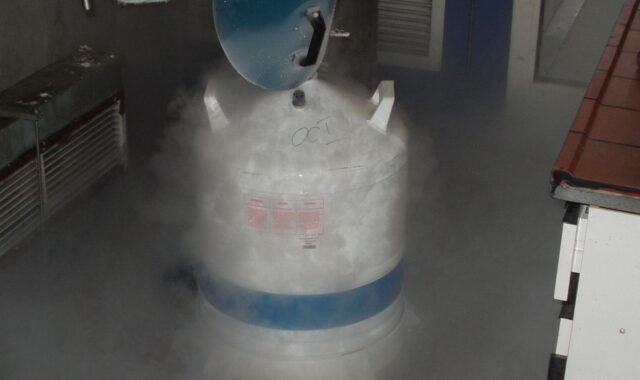
| Cryogens | Cold burns, pressure buildup, oxygen displacement | Use vented containers, face and hand protection, oxygen monitoring where needed, and training for transfer operations |
| Mechanical and equipment hazards | Rotating parts, centrifuge failure, pinch points, vibration, stored energy | Inspect rotors, balance loads, use guards, follow lockout procedures where applicable, and remove damaged equipment from service |
| Electrical and thermal hazards | Shock, burns, overheating, ignition | Keep cords intact, avoid overloaded outlets, control hot surfaces, verify grounding, and keep combustibles away from heat sources |
Good housekeeping supports every hazard category. Clear aisles, clean benches, closed containers, labeled samples, uncluttered hoods, and accessible emergency equipment reduce the chance that a small error becomes a serious incident.
Prepare facilities and emergency equipment before an incident
Emergency readiness must be in place before the emergency occurs. OSHA 29 CFR 1910.151(c) requires suitable facilities for quick drenching or flushing of the eyes and body where employees may be exposed to injurious corrosive materials. OSHA interpretations commonly point employers to ANSI/ISEA Z358.1 for guidance on emergency eyewash and shower installation and operation, while making clear that OSHA interprets its own regulations rather than ANSI standards.
Eyewashes and safety showers
Emergency eyewash and shower units must be reachable, visible, unobstructed, and functional. In practice, laboratories should verify access routes, signage, water activation, drainage conditions, and whether equipment can deliver flushing fluid long enough for emergency response. Weekly activation of plumbed units is commonly used to confirm operation and flushing fluid availability, and periodic inspections should be documented. Bottled eyewash may support immediate first response in limited situations, but it should not be treated as a substitute for required emergency flushing facilities where corrosive exposure is reasonably expected. See also: analytical methods.
Fire protection and ventilation
Laboratories using chemicals should also review fire risk. NFPA 45 addresses fire protection for laboratories using chemicals and is commonly referenced by designers, fire authorities, and safety professionals. Practical fire prevention includes limiting excess flammable liquids, using approved flammable storage cabinets, grounding and bonding where appropriate, keeping ignition sources away from vapors, maintaining fume hood performance, and training personnel on when evacuation is safer than attempting to fight a fire.
Spill and exposure response
A spill plan should state who can clean a spill, who must evacuate, what PPE is required, how waste is collected, and when emergency responders are called. Small nuisance spills and high-hazard releases are not the same event. A spill involving a volatile toxic chemical, unknown biological material, mercury, hydrofluoric acid, pyrophoric material, or pressurized gas may require specialized response. Exposure response should include immediate first aid, reporting, medical evaluation when needed, and preservation of key information such as chemical identity, concentration, route of exposure, and duration.
Make inspections, training, and incident learning measurable
Laboratory safety improves when it is measured in ways that reflect real controls. A checklist can help, but it should go beyond cosmetic compliance. Instead of asking only whether gloves are present, check whether glove selection matches the chemicals in use. Instead of confirming that a fume hood exists, verify that the sash is used correctly, storage inside the hood is limited, and personnel understand airflow alarms.
- Monthly or periodic inspections: Review chemical storage, unlabeled containers, expired materials, blocked exits, eyewash access, waste accumulation, damaged cords, fume hood use, and housekeeping.
- Training records: Track who has completed general safety training, task-specific SOP training, emergency training, and refresher training after changes or incidents.
- Near-miss reporting: Encourage reporting of spills, dropped containers, unexpected reactions, centrifuge imbalance, needle-stick risks, and PPE failures before injury occurs.
- Corrective actions: Assign an owner, due date, and verification step so inspection findings are actually closed.
- Management review: Periodically review trends such as repeated storage violations, recurring equipment failures, and training gaps.
Training should cover more than rules. Workers should understand why a control exists, what can happen if it fails, how to recognize abnormal conditions, and when to stop work. A strong safety culture allows personnel to pause an experiment when a procedure, material, or instrument does not match the approved plan.
Frequently asked questions
What is the most important part of a laboratory safety guide?
The most important part is the risk assessment process. Without it, PPE, training, emergency equipment, and written procedures may not match the actual hazards of the task. Risk assessment connects the material, method, equipment, personnel, and facility into one safety decision.
Does every lab need a Chemical Hygiene Plan?
Laboratories covered by OSHA’s Laboratory Standard and using hazardous chemicals need a written Chemical Hygiene Plan. Other laboratories may still need written safety procedures under institutional policy, biosafety rules, fire code, hazardous waste rules, or other applicable requirements. The practical point is that hazardous work should not depend on informal memory.
Is PPE enough for laboratory safety?
No. PPE is important, but the hierarchy of controls places it after elimination, substitution, engineering controls, and administrative controls. A safer lab reduces hazards at the source whenever practical, then uses PPE as the final layer of protection.
How often should laboratory safety procedures be reviewed?
Procedures should be reviewed whenever work changes, after incidents or near misses, when new materials or equipment are introduced, and during scheduled safety reviews. High-risk procedures should receive more frequent review than stable, low-risk routine tasks.
Who is responsible for laboratory safety?
Responsibility is shared. Employers and institutions must provide safe systems, facilities, training, and oversight. Supervisors must implement controls and verify safe work. Laboratory personnel must follow procedures, report problems, and stop work when conditions appear unsafe.