How to manage equipment and apparatus in laboratory workflows
What equipment and apparatus mean in a working laboratory
In a working laboratory, equipment and apparatus are not just a catalog of tools. The term can include glassware, instruments, containment devices, utilities, software-controlled systems, and safety assets that make testing or research possible. A practical management approach starts with one question: could this item affect safety, data quality, sample integrity, or regulatory compliance? If the answer is yes, the asset needs defined selection criteria, documented use, maintenance, calibration or verification, and clear responsibility. Public guidance and standards from OSHA, CDC and APHL, ISO/IEC 17025, USP <1058>, and FDA inspection materials all point to the same operating principle: laboratory assets should be fit for their intended purpose and kept under control throughout their life cycle.
This article explains how to classify common laboratory items, where validation is actually needed, and how to build an equipment control system that is usable in daily work without turning every beaker into a paperwork burden. You can also explore more in service and validation.
A useful way to classify laboratory assets
Many laboratories use the words equipment, instrument, and apparatus interchangeably, but it is helpful to separate assets by risk, function, and use. A simple spatula and a computerized chromatographic system do not need the same level of control. The classification should reflect the work being performed, the hazards present, and the degree to which the item can influence results.
| Asset group | Typical examples | Main control focus |
|---|---|---|
| Basic apparatus | Beakers, flasks, funnels, clamps, stands, filtration assemblies | Cleanliness, compatibility, correct assembly, breakage control |
| Measuring equipment | Balances, thermometers, pipettes, pH meters, timers | Calibration, verification, tolerance limits, user checks |
| Analytical instruments | HPLC, GC, UV-Vis spectrophotometers, mass spectrometers | Qualification, system suitability, software control, maintenance records |
| Environmental control equipment | Incubators, ovens, refrigerators, freezers, stability chambers | Temperature control, mapping where needed, alarms, trend review |
| Safety and containment equipment | Chemical fume hoods, biosafety cabinets, eyewash stations, safety showers, autoclaves | Inspection, airflow or function checks, emergency readiness, operator training |
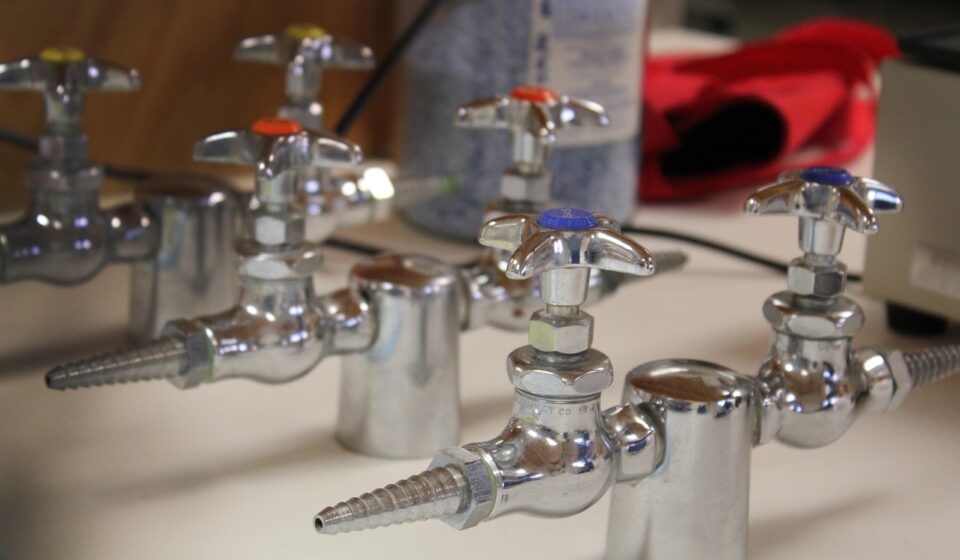
| Utilities and support systems | Compressed gases, vacuum systems, purified water, electrical supply, ventilation | Preventive maintenance, safety controls, change management |
This risk-based classification prevents a common blind spot: the same type of item can move into a higher control category when the application changes. A thermometer used for rough room checks may need only a basic verification plan. The same type of thermometer used to release temperature-sensitive samples may require traceable calibration, acceptance limits, and documented corrective action when it fails.
Selection should start with fitness for purpose
Before purchasing or assigning any equipment, the laboratory should define its intended use. Fitness for purpose is not just a quality phrase; it is the practical link between scientific need and operational control. A balance, for example, should be selected for the mass range, readability, environmental conditions, sample type, and tolerance required by the method. A centrifuge should be chosen for rotor compatibility, speed range, containment needs, maintenance access, and operator safety.
Selection criteria should be documented at a level proportionate to risk. For basic apparatus, the record may be a specification in a method or a purchasing note. For a critical instrument, it may include user requirements, installation conditions, service access, data management needs, software controls, spare parts availability, and calibration capability.
The most common selection mistake is buying for technical features without checking workflow fit. An advanced instrument can still become a weak point if the laboratory lacks trained operators, suitable utilities, validated methods, maintenance support, or space that meets the manufacturer’s environmental requirements. The better question is not whether the device is sophisticated, but whether it can produce reliable results under the laboratory’s actual conditions.
Validation, qualification, calibration, and verification are not the same
Laboratory teams often use validation as a broad label for every control activity. In practice, different activities answer different questions. Keeping those questions separate helps prevent both under-control and unnecessary documentation.
Qualification asks whether the system is installed and operating as intended
Qualification is most relevant to instruments or systems that directly affect results. In analytical settings, USP <1058> treats instrument control as a life-cycle activity and describes qualification, calibration, validation, and maintenance as related ways to show that an instrument remains suitable for use. A common model includes installation qualification, operational qualification, and performance qualification, although the exact approach should match the instrument and regulatory environment.
Calibration asks whether measurements agree with a known reference
Calibration is essential for measuring equipment that affects decisions. Balances, pipettes, thermometers, pressure gauges, conductivity meters, and similar devices should have defined intervals, acceptance limits, labels or accessible status records, and action rules when they are out of tolerance. ISO/IEC 17025 places strong emphasis on technically valid results, equipment control, and metrological traceability in testing and calibration laboratories.
Verification asks whether performance remains acceptable for use
Verification may be done between calibrations or before use. A daily balance check, pipette gravimetric check, incubator temperature review, or pH meter two-point check can show whether the equipment is performing acceptably for the current task. Verification does not replace calibration when calibration is required, but it can detect problems earlier.
Method validation asks whether the procedure works for its intended use
Method validation is about the analytical procedure, not just the instrument. FDA inspection materials for pharmaceutical quality control laboratories distinguish between equipment condition, calibration records, method validation data, raw data, and overall laboratory control. A well-calibrated instrument cannot compensate for a poorly designed or unverified method.
For more discussion of service controls and validation planning, see the site’s service and validation resources.
Safety equipment deserves the same management discipline as analytical equipment
Safety assets are sometimes treated as background infrastructure, but they are part of the laboratory’s operating system. OSHA’s Laboratory Standard for hazardous chemicals in non-production laboratories requires a Chemical Hygiene Plan when hazardous chemicals are used, and the plan addresses procedures, equipment, personal protective equipment, and work practices. OSHA’s non-mandatory laboratory guidance also emphasizes regular inspection and maintenance of laboratory equipment, along with appropriate placement of eyewash units, safety showers, and fire extinguishers.
Chemical fume hoods and biosafety cabinets require special attention because they can appear functional while performing poorly. A fume hood may need face velocity checks, sash management, alarm response procedures, and restrictions on storage inside the hood. A biosafety cabinet may require certification or inspection according to the laboratory’s biosafety program and the type of work performed. Autoclaves, centrifuges, compressed gas cylinders, and vacuum systems also present mechanical, thermal, pressure, or biological hazards that should be addressed in standard operating procedures.
The safety principle is straightforward: if an item protects people, samples, or the environment, it should have a defined owner, an inspection schedule, acceptance criteria, and a clear response when it fails.
Records should prove control without burying the laboratory in paperwork
Good equipment records are not created for storage. They are created so the laboratory can make decisions. A record system should answer five questions quickly: what is the asset, where is it, what is it used for, what is its current status, and what happened when it did not meet expectations? See also: analytical methods.
A practical equipment file often includes:
- Unique identification number and location
- Manufacturer, model, serial number, and key specifications
- Intended use and criticality level
- Installation or commissioning records when applicable
- Operating procedure or reference to the method
- Calibration, verification, maintenance, service, and repair history
- Current status, such as in service, out of service, restricted use, or awaiting calibration
- Training records or authorized user list for higher-risk systems
- Deviation, failure, and corrective action records
CDC and APHL competency guidance for public health laboratories identifies equipment selection, installation, use, maintenance, troubleshooting, and calibration as part of laboratory quality management. CDC quality materials also stress maintenance logs, function checks, and documentation of remedial action when checks fail. The value of these records becomes clear during investigations: they help determine whether questionable results came from the sample, the method, the operator, the environment, or the equipment.
A life-cycle approach reduces risk and cost
Laboratory equipment control should not begin at the first calibration and end when a device breaks. A life-cycle approach follows the asset from need definition to retirement. This is especially important for instruments with software, data systems, complex maintenance needs, or direct impact on patient, product, environmental, or research conclusions.
- Plan: Define intended use, risk level, user requirements, utilities, safety needs, and data requirements.
- Select: Compare technical capability, support, service access, consumables, compatibility, and total cost of ownership.
- Receive and install: Check condition, location, utilities, environmental limits, accessories, and documentation.
- Commission or qualify: Confirm that the system is installed and operates as expected before routine use.
- Use: Train users, follow procedures, document critical checks, and control changes.
- Maintain and calibrate: Follow risk-based intervals, manufacturer guidance, historical performance, and method requirements.
- Review: Trend failures, out-of-tolerance events, downtime, repairs, and user feedback.
- Retire: Remove from service, protect data, prevent unintended use, and update inventory records.
This approach also helps laboratories avoid false economy. A cheaper device may cost more if it requires frequent repair, lacks service support, cannot be calibrated to the required tolerance, or creates data integrity concerns. Conversely, not every apparatus needs a complex validation package. Risk-based control is the point.
Common control gaps and how to close them
Several equipment problems repeat across research, clinical, industrial, and teaching laboratories. The first is unclear ownership. If no one owns the asset, maintenance and status review become optional. Assigning a responsible person or role closes that gap.
The second is missing acceptance criteria. A record that says checked is weaker than a record showing what was checked, the expected range, the result, and whether the equipment passed. The third is using equipment after failed calibration or repair without assessing data impact. When a critical measuring device is out of tolerance, the laboratory should evaluate work performed since the last acceptable check and document the decision.
The fourth is uncontrolled relocation or modification. Moving a balance, changing a rotor, updating instrument software, or altering a gas supply can affect performance. Higher-risk changes should trigger a review before routine use resumes. The fifth is treating cleaning as housekeeping only. For apparatus that contacts samples or reagents, cleaning can affect contamination, carryover, and result reliability.
A practical monthly review can catch many of these issues. Review assets due for calibration, items out of service, repeat failures, overdue maintenance, training gaps, and any temporary workaround that has become routine.
Frequently asked questions
What is the difference between laboratory apparatus and laboratory equipment?
Apparatus often refers to the tools, assemblies, and devices used to carry out an experiment, such as glassware, clamps, burners, funnels, and filtration setups. Equipment is broader and often includes powered, measuring, analytical, safety, and environmental control systems. In daily use, the terms overlap, so risk and intended use matter more than the label.
Does every item in a laboratory need validation?
No. Validation or qualification should be proportionate to risk. A critical analytical instrument or computerized system may need a documented qualification package, while simple apparatus may only need inspection, cleaning, and correct use. Measuring devices that affect decisions usually need calibration or verification.
How often should laboratory equipment be calibrated?
The interval depends on manufacturer recommendations, method requirements, regulatory expectations, historical stability, frequency of use, environmental conditions, and risk. A laboratory should define the interval, monitor performance, and adjust it when repeated failures or stable history justify a change.
What should be done when equipment fails a check?
Remove or restrict the equipment from use, label its status, investigate the cause, repair or recalibrate it, and assess whether previous results may have been affected. The level of investigation should match the equipment’s role in the workflow and the seriousness of the failure.
Why is safety equipment included in equipment management?
Safety equipment controls exposure, containment, fire response, emergency washing, sterilization, and other critical protections. If it is not inspected, maintained, and ready for use, the laboratory may have a hidden operational risk even when analytical instruments are well controlled.
Key takeaway
Managing equipment and apparatus in laboratory workflows is not about creating the longest inventory list. It is about knowing which assets affect safety, results, samples, compliance, and continuity, then applying the right level of control. A strong program classifies assets by risk, selects them for intended use, separates qualification from calibration and verification, treats safety equipment as critical infrastructure, and keeps records that support decisions. That disciplined but proportionate approach makes laboratory work more reliable, auditable, and resilient.