Analytical weighing scale selection, calibration and use in laboratory methods
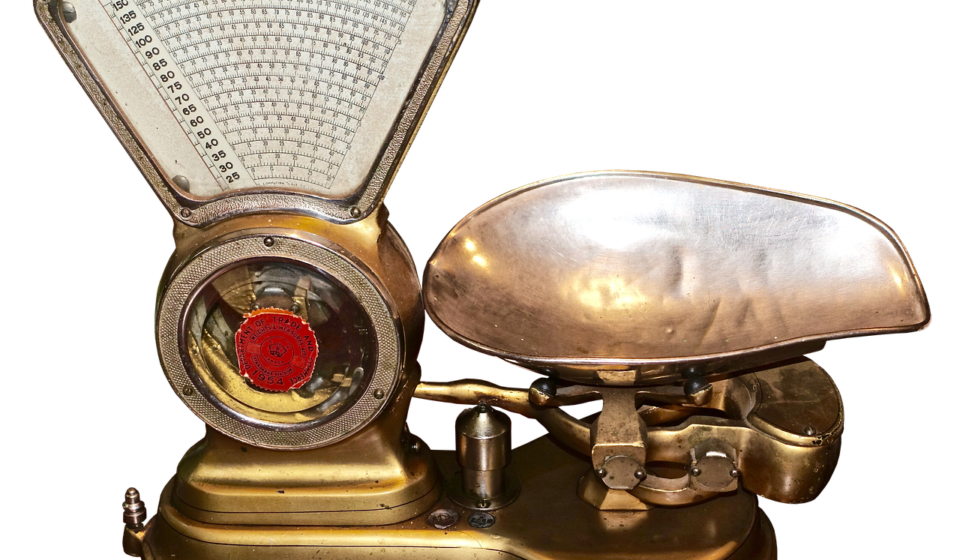
Why weighing controls more than a number on the display
An analytical weighing scale, more accurately called an analytical balance in many laboratory settings, is used when a method depends on small differences in mass. The key question is not simply whether the display reads to 0.0001 g. It is whether the balance, the sample, the room conditions and the written procedure can keep uncertainty low enough for the amount being weighed.
A four-decimal display can still produce unsuitable data if the sample is too small, the balance is not level, the weighing vessel carries static charge, or routine checks are missing. For analytical methods, the balance should be selected and controlled as part of the method, not treated as a general bench accessory. Wanggougou covers laboratory instrument topics for readers who need practical context around analytical equipment.
Mass is often the first measured input in a chemical, pharmaceutical, environmental or materials method. If that mass is biased or unstable, later dilution, extraction, assay or calibration steps carry the error forward. For this reason, standards and guidance from organizations such as USP, ISO, OIML, NIST and EURAMET discuss weighing in terms of fitness for use, calibration, repeatability, traceability and uncertainty, not display resolution alone.
Analytical weighing scale or analytical balance
The phrase analytical weighing scale is common in purchasing and search language. In laboratory practice, analytical balance is often the more precise term because the instrument is designed for accurate mass measurement at small quantities. A typical analytical balance has a readability of 0.1 mg, or 0.0001 g. Semi-micro and micro balances provide finer readability, while precision balances are generally used for larger samples where milligram or higher readability is sufficient.
The terminology matters because users may assume that scale, balance, accuracy and readability mean the same thing. They do not. Readability is the smallest displayed increment. Repeatability describes how closely repeated measurements agree under the same conditions. Accuracy, in practical laboratory use, concerns how close the result is to the accepted value after calibration and control of errors. Linearity, eccentricity, sensitivity drift, environmental effects and operator technique can all influence whether a weighing result is suitable for a method.
| Instrument type | Typical readability | Common use | Main limitation |
|---|---|---|---|
| Precision balance | About 1 mg to 100 mg | Routine formulation, larger reagents, sample preparation | Usually not suitable for very small analytical portions |
| Analytical balance | About 0.1 mg | Quantitative analytical weighing and standards preparation | Requires stable environment and minimum weight control |
| Semi-micro balance | About 0.01 mg | Smaller reference standards and limited sample quantities | More sensitive to drafts, vibration, static and temperature |
| Microbalance | About 0.001 mg or finer | Very small samples and specialized analytical work | Needs stronger environmental control and operator discipline |
Key specifications that affect method results
When choosing an analytical weighing scale, capacity and readability are only the starting point. A balance with high capacity and fine readability may look attractive, but its useful working range depends on actual performance at the loads used in the method. Laboratories should compare specifications and calibration data with the smallest net sample weight, the largest container plus sample load, and the uncertainty tolerated by the method.
- Readability: the smallest change shown on the display. It supports observation but does not prove accuracy.
- Repeatability: the spread of repeated readings for the same load. For small sample masses, this often dominates uncertainty.
- Linearity: how consistently the balance responds across its weighing range.
- Eccentricity: the effect of placing the load away from the center of the pan.
- Minimum weight: the smallest net sample mass that can be weighed while meeting the method’s relative uncertainty or tolerance requirement.
- Stabilization time: how long the balance needs to produce a stable indication after a load is placed.
- Data handling: whether results, user actions, calibration events and adjustments can be recorded in a way that meets the laboratory’s quality system.
For analytical methods, minimum weight deserves particular attention. A balance with a readability of 0.1 mg does not automatically make a 10 mg weighing acceptable. The relative effect of random variation is much larger at 10 mg than at 500 mg. A method with tight assay accuracy requirements may need a larger weighed portion, a more sensitive balance or a validated preparation strategy such as serial dilution from a larger mass.
Calibration, adjustment and routine checks
Calibration and adjustment are often confused. Calibration compares the balance indication with known reference weights and evaluates error and uncertainty. Adjustment changes the balance response to reduce error. Internal motorized adjustment can be useful, especially when temperature changes, but it does not replace documented calibration or routine performance checks where a quality system requires them.
In regulated or accredited environments, calibration should be traceable to appropriate mass standards and performed over a range relevant to actual use. EURAMET guidance on non-automatic weighing instruments emphasizes practical calibration procedures and uncertainty evaluation. ISO/IEC 17025 frames calibration and testing competence around valid results, traceability and consistent operation. In pharmaceutical manufacturing, 21 CFR 211.68 requires automatic, mechanical and electronic equipment used in production activities to be routinely calibrated, inspected or checked according to a written program, with written records maintained.
Routine checks should be risk-based rather than copied from another laboratory without review. A balance used daily for critical reference standard preparation may need checks before use or at defined intervals during use. A balance used occasionally for noncritical rough weighing may justify less frequent checks. Check weights should be clean, suitable for the balance resolution, handled with forceps or gloves, and chosen near the mass range used in the method. A single high-capacity check weight may not reveal problems that affect low-mass analytical weighing.
| Control activity | Purpose | Typical evidence |
|---|---|---|
| External calibration | Establish performance and uncertainty against traceable standards | Calibration certificate with points, results and uncertainty |
| Internal adjustment | Correct sensitivity drift within the instrument’s design | Instrument log or audit trail entry |
| Daily or pre-use check | Confirm the balance remains fit for the immediate task | Recorded check weight result and acceptance limit |
| Repeatability check | Assess random variation under local conditions | Series of repeated weighings and calculated standard deviation |
| Eccentricity check | Detect pan-position effects | Results from center and off-center load positions |
Method suitability depends on sample mass and uncertainty
An analytical weighing scale should be matched to the analytical method, not merely to a catalog category. The same balance may be suitable for weighing 250 mg of a stable reference standard but unsuitable for 8 mg of a hygroscopic compound. The method’s required accuracy, sample behavior and preparation workflow should determine the balance class and the controls around it.
USP <41> and the informational USP <1251> are influential references for pharmaceutical laboratories because they focus attention on repeatability, accuracy and weighing practice. The practical lesson is useful outside pharmacopeial work as well: the smallest acceptable sample mass should be derived from actual balance performance and method requirements. If the method says to weigh accurately, the laboratory should be able to show that the chosen mass is above the balance’s minimum weight for the required tolerance.
For non-regulated research, the same logic still improves data quality. A published procedure may list a small mass because the original laboratory had a semi-micro balance, controlled humidity and experienced analysts. Repeating that method on a standard analytical balance in a drafty room can produce different results even if the displayed numbers appear precise. When uncertainty matters, increasing the weighed mass and diluting to volume is often more robust than pushing a balance near its lower practical limit.
Environmental and sample effects that cause unstable readings
Analytical balances are sensitive instruments, and many apparent instrument problems are caused by the room, bench, sample or operator. A stable weighing location should minimize air movement, vibration, temperature gradients and electromagnetic interference. The balance should be level, warmed up according to the manufacturer’s instructions and protected by a draft shield when appropriate.
- Drafts: air conditioning, doors and rapid hand movement can shift readings at 0.1 mg readability.
- Vibration: nearby centrifuges, pumps, foot traffic or flexible benches can prevent stable readings.
- Temperature differences: warm samples or vessels create convection currents and apparent mass drift.
- Static electricity: plastic vessels, gloves, powders and dry air can attract or repel the weighing pan.
- Moisture exchange: hygroscopic materials gain water, while volatile materials lose mass during weighing.
- Magnetism: magnetic stir bars, tools or samples can interact with balance components.
- Contamination: spilled material under or around the pan can cause drift, corrosion or mechanical interference.
Technique is also part of measurement control. The operator should close the draft shield before reading, wait for stability, avoid leaning on the bench, use appropriate containers, center the load and record the net mass according to the method. Taring is convenient, but it does not remove uncertainty from the net weighing process. For critical work, weighing by difference can reduce handling losses and improve control for powders that cling to vessels.
A practical selection checklist
Before buying or assigning an analytical weighing scale to a method, the laboratory should define the weighing problem. This avoids overspending on unnecessary readability and, more importantly, prevents under-controlling a critical step.
- Define the smallest and largest net sample masses. Include real sample preparation steps, not only the nominal method value.
- Define the required tolerance or uncertainty. A teaching lab, research screen and GMP assay may need different controls.
- Check capacity with containers included. A large flask or bottle can consume much of the balance capacity before sample is added.
- Review repeatability data. Use manufacturer specifications as an initial screen, then confirm performance in the installed location.
- Plan calibration and routine checks. Decide which weights, intervals, acceptance limits and records are needed.
- Assess the environment. If the room is unstable, buying finer readability may make readings more difficult rather than more reliable.
- Consider data integrity needs. Regulated labs may need user access control, audit trails, printer or LIMS connection and protected records.
- Train users. Even a high-quality balance performs poorly when vessels are warm, loads are off-center or doors are left open.
A useful purchase decision links the balance to actual analytical methods. A balance for general reagent preparation may prioritize capacity and ruggedness. A balance for reference standard preparation may prioritize repeatability, minimum weight, anti-static control and data capture. A balance for micro-samples may require environmental upgrades before the instrument itself can deliver meaningful performance.
How major references guide weighing decisions
Several recognized references address different parts of laboratory weighing. They should not be treated as interchangeable, but together they show why analytical weighing is a controlled measurement process.
| Reference | Main relevance | Practical takeaway |
|---|---|---|
| USP <41> and USP <1251> | Balances for accurately weighed materials and analytical balance practice | Focus on repeatability, accuracy and minimum weight, not display resolution alone |
| ISO/IEC 17025 | Competence of testing and calibration laboratories | Equipment control, traceability and valid results must support reported measurements |
| OIML R 76 | Non-automatic weighing instruments under metrological control | Weighing instruments are classified and evaluated by technical and metrological requirements |
| NIST Handbook 44 | U.S. specifications and tolerances for weighing and measuring devices in legal metrology contexts | Legal-for-trade or controlled uses may require requirements beyond routine laboratory preference |
| EURAMET calibration guidance | Calibration of non-automatic weighing instruments | Calibration should include uncertainty evaluation relevant to how the balance is used |
The practical conclusion for laboratory methods is straightforward: select the balance for the required net mass and uncertainty, install it in a suitable environment, calibrate it with traceability, check it at meaningful loads and train users in consistent technique. An analytical weighing scale is reliable only when the instrument and the method are controlled together.
Frequently asked questions
Is an analytical weighing scale the same as an analytical balance?
In common search language, many people use the terms interchangeably. In laboratory practice, analytical balance is the more precise term for an instrument designed to measure small masses with high readability, commonly around 0.1 mg.
Is 0.0001 g readability enough for all analytical methods?
No. Readability shows the display increment, not the guaranteed accuracy of every result. The smallest acceptable sample mass depends on repeatability, calibration, environment, sample behavior and the method’s uncertainty requirement.
How often should an analytical balance be calibrated?
There is no universal interval that fits every laboratory. Frequency should be based on risk, workload, required uncertainty, past performance, regulatory expectations and manufacturer recommendations. Critical balances often need both scheduled external calibration and documented routine checks.
Why does the balance reading drift after I place a sample on the pan?
Common causes include drafts, vibration, static electricity, temperature differences between the sample and room, evaporation, moisture absorption or an unstable bench. Let samples reach room temperature, close the draft shield and control the weighing environment before assuming the instrument is faulty.
What is minimum weight in analytical weighing?
Minimum weight is the smallest net sample mass that can be weighed while still meeting the required relative uncertainty or tolerance. It should be determined from actual balance performance and method requirements rather than assumed from the number of display decimals.